What Google Actually Says About Link Exchanges (2025 Edition)
Backlinks still influence how pages rank in search results. But not all links help. Some can get your site penalised, especially if they’re part of a link scheme.
One tactic that often raises questions is link exchanges. Can you trade links safely? Are reciprocal links considered spam? And what does Google say about link exchanges in 2025?
This article breaks down Google’s stance, clarifies where the line is drawn, and explains how to stay on the right side of webmaster guidelines while using link-building strategies that work.
Are Link Exchanges Allowed Under Google’s Guidelines?
Google does not ban all link exchanges. It draws a clear line between helpful linking and manipulative behaviour.
According to Google’s Webmaster Guidelines, excessive link exchanges, also called link schemes, violate its spam policies. This includes direct link exchanges done “solely for cross-linking.”
That means swapping links only to influence search rankings is risky. Especially if you’re linking to low-quality sites or unrelated pages.
However, relevant links placed editorially can still be acceptable. For example, linking between partner websites where content aligns naturally often doesn’t trigger penalties.
Google’s web spam team looks for patterns that appear automated or forced. If links lack context or relevance or show signs of manipulation, they may lead to a manual action.
In short: context, intent, and moderation matter. Google prioritises the placement of links over whether a swap has occurred.
Difference Between Natural Links and Link Swaps
Natural links are earned when another website chooses to reference your content without any prior agreement or request. They happen because the content is useful, unique, or worthy of citation.
Link swaps involve a mutual agreement. Two websites exchange links, either on the same page, across multiple sites, or using a three-way link exchange. This arrangement is planned, not spontaneous.
Google’s search systems treat these differently. Natural backlinks are signals of trust. On the other hand, if you exchange links solely to manipulate rankings, they can be flagged as a link scheme.
The key difference lies in intent and editorial control. Natural links are placed independently. Swapped links are agreed upon, which can make them less trustworthy in Google’s eyes, especially if done at scale.
To stay safe, focus on relevance and value. If a link benefits users and fits contextually, it’s more likely to be seen as helpful, not spam.
What Counts as a ‘Link Scheme’ in Google’s Eyes?
Google considers a link scheme to be any attempt to manipulate search rankings using backlinks. This includes paid links, large-scale article marketing, and direct link exchanges with no editorial value.
Reciprocal links become risky when done excessively or across unrelated websites. Swapping links between two websites just to boost each other’s authority often signals manipulation.
Other red flags include:
- Links with keyword-stuffed anchor text
- Outbound links placed in footers across multiple sites
- Automated link swapping or participation in private networks
Google uses manual reviewers and algorithms to detect these tactics. If flagged, a website may face a manual action or algorithmic suppression in search results.
To avoid risk, link building must feel natural and helpful. Anything that feels forced, automated, or done for ranking alone may violate webmaster guidelines.
Where Reciprocal Links Become Risky
Reciprocal links are not banned outright. They become risky when they appear unnatural, excessive, or irrelevant to the page’s content.
Common reciprocal links often occur between partners or related businesses. But if two websites swap links without context or purpose, search engines may treat this as part of a link scheme.
Risk increases when:
- The same domain trades links repeatedly across different posts
- Anchor text appears overly optimised or identical in each trade
- Too many links point back and forth without editorial value
Google’s web spam team looks for patterns that indicate manipulation. Even high authority websites can face penalties if link exchanges feel forced or artificial.
To reduce risk, focus on relevance and moderation. A few quality links that make sense are safer than multiple links created purely for SEO.
Can You Get Penalised for Link Exchanges?
Yes, Google can penalise websites for improper link exchanges. The penalty may come as a manual action or a silent algorithmic drop in search rankings.
Manual actions happen when Google’s reviewers find clear signs of link manipulation. Common triggers include:
- Link swapping across unrelated or low-quality sites
- Obvious link spam or site-wide outgoing links
- Participation in backlink exchange networks with no editorial oversight
Algorithmic demotions are harder to detect. Your traffic may drop without warning if your website’s link profile shows suspicious patterns over time.
The risk increases with:
- Excessive two-way links from the same IP range
- Pages overloaded with outbound links
- Repetitive anchor text in swapped backlinks
Google’s algorithms are trained to spot these patterns. If they believe links exist only to manipulate rankings, your site may lose visibility.
See Related: Common Link Building Mistakes
How Common Are Link Swaps in Modern Link Building?
Despite warnings from Google, link swaps remain a popular method in modern SEO strategies.
Most marketers understand that link building is difficult without outreach or networking. Swapping links, when done with care, offers mutual benefit and requires fewer resources than guest posts or buying backlinks.
Many SEOs still exchange links:
- Between niche-relevant blogs
- To promote new content quickly
- As part of relationship-based marketing
The key is moderation. A few common reciprocal links between related domains won’t trigger a penalty. But if link exchanges dominate your link profile, that’s a red flag.
Google’s systems look for abuse, not occasional partnerships. That’s why experienced site owners use platforms like Link Swap to find relevant links while avoiding low-quality sites and link spam.
Checklist: Avoiding Bad Links and Maintaining a Healthy Backlink Profile
Before you exchange links, review each opportunity carefully. A few checks can help avoid link spam and maintain a clean backlink profile.
Ask yourself:
- Does the other website share a similar niche or audience?
- Is the page linking to yours relevant and helpful?
- Is the anchor text natural and varied?
- Is the site free from spammy links or low-quality content?
- Is this part of a pattern involving multiple sites or repeated trades?
Also, check the website’s authority and traffic levels. Tools like Ahrefs or Moz can highlight red flags such as fake DR, high spam scores, or outbound link abuse.
If any part of the trade feels forced or unnatural, walk away. It’s better to skip a link than add one that could hurt your rankings.
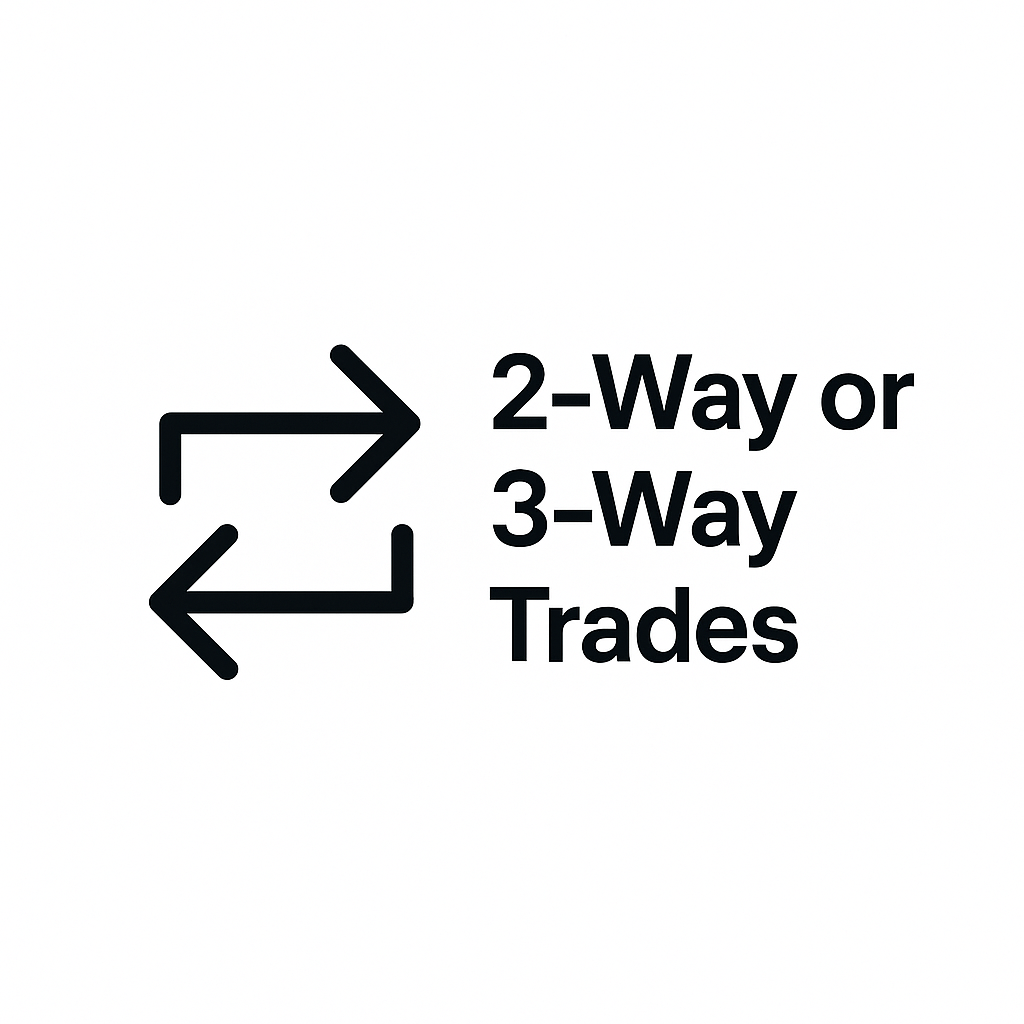
2-Way vs 3-Way Link Exchanges: How Google Views Multi-Site Linking Patterns
Google treats all link schemes with suspicion, including those involving two or more websites. But some patterns raise fewer red flags than others.
A 2-way link exchange is a direct trade: site A links to site B, and B links back to A. This pattern is easy to detect and often signals reciprocal links done to manipulate rankings.
A three-way link exchange uses a third domain to avoid a visible loop. Site A links to B, and B’s partner site C links back to A. While this appears safer, Google may still flag unnatural linking across multiple sites, especially if repeated.
The safest approach is variety. Avoid repeating exact anchor text, and don’t use the same domain pair too often.
Link exchanges should appear natural in your website’s link profile. Anything that feels calculated or excessive could trigger a manual review.
How to Swap Links Safely Without Violating Google’s Guidelines
To avoid a Google penalty, focus on relevance and editorial control when you swap links.
Relevance means the linked content should match the topic of the page. Don’t link to unrelated websites or use anchor text that misleads users or search engines.
Editorial control means you should decide where, how, and why the link appears. Avoid automated link placement tools or trades with sites that insert links without reviewing content.
Ask:
- Does the link offer real value to readers?
- Would I still include it without expecting one back?
- Is the link placed within helpful, original content?
If the answer is yes, the exchange is more likely to be safe. Google looks for patterns that signal manipulation, not genuine collaboration between relevant sites.
Avoiding Over-Optimised Anchor Text and Patterns
Google pays close attention to anchor text and linking patterns. If your anchor text is too exact or repeated too often, it becomes a risk of abuse of the ranking signal.
Avoid:
- Exact match keywords used in every swapped link
- Unnatural language or stuffed phrases in the anchor text
- Identical anchors linking from multiple domains
Instead, vary your anchor text. Use branded, generic, or descriptive phrases that fit the sentence and match the content.
Also, avoid creating predictable patterns. If every backlink you gain comes from a reciprocal trade or uses the same format, search engines may see it as a link scheme.
Mix your link sources and styles. Add links through guest posts, citations, or tools like Link Swap that focus on relevance over repetition.
Frequently Asked Questions
Is a backlink exchange allowed under Google’s guidelines?
Yes, backlink exchanges are allowed if done in moderation and with relevance. However, Google flags excessive or manipulative link exchanges as part of a link scheme. The key is editorial control, natural placement, and relevance to the content, not just linking to boost search rankings.
How do I avoid linking to low-quality websites in an exchange?
Check the other site’s content quality, traffic, spam score, and backlink profile using tools like Ahrefs or Moz. Avoid sites with thin content, excessive outbound links, or irrelevant niches. Only exchange with sites that align with your audience and offer genuine value to users.
What is the difference between natural backlinks and a link scheme?
Natural backlinks are earned without any prior agreement. They’re given because your content is helpful. A link scheme involves planned exchanges, often just to manipulate rankings. If the link exists purely for SEO without user value, it likely falls into the link scheme category.
How can I tell if a link exchange is considered link spam by Google?
If a link exchange appears excessive, irrelevant, automated or lacks editorial oversight, it may be seen as link spam. Watch for repetitive anchor text, swaps with unrelated sites, or links placed in footers or sidebars across multiple pages; these are typical red flags.
How many backlinks from exchanges are too many?
There’s no set number, but if exchanged links dominate your backlink profile, it’s risky. Google looks at patterns, not totals. Keep link swaps occasional, contextually relevant, and varied in anchor text to maintain a natural link profile and avoid triggering penalties.
Final Thoughts: What Google Actually Cares About
Google doesn’t penalise link exchanges because they exist. It penalises them when they become manipulative, excessive, or offer no value to users.
Search engines evaluate the intent behind a link. If your only goal is to manipulate rankings with reciprocal links or link swaps, you’re taking a high risk.
Instead, focus on:
- Links that provide useful context or further reading
- Connections that help users, not just metrics
- Earning relevance through content quality and clear editorial judgment
Your backlink profile should reflect natural, helpful linking, not a pattern designed to game the algorithm.
Ultimately, links that make sense to humans are more likely to be trusted by Google. That’s what truly matters.
If you’re looking to build backlinks without the usual risks, tools like Link Swap offer a practical alternative. They help you match with relevant sites, avoid low-quality links, and focus on long-term value, exactly what Google wants to see.
Learn More About Link Swap Here!